
JOURNAL 7 – Do Accent Walls Still Work in 2026?
A Modern Interior Designer’s Perspective
Accent walls have been debated for years.
Some say they are outdated. Others insist they are timeless.
As a luxury residential interior designer, my answer is simple.
Accent walls absolutely still work in 2026.
But only when they are intentional.
Like most interior design elements, success is not about trend. It is about proportion, balance, architecture, and purpose within the space.
Let’s explore when accent walls elevate a room and when they fall flat.
1. Paint Accent Walls
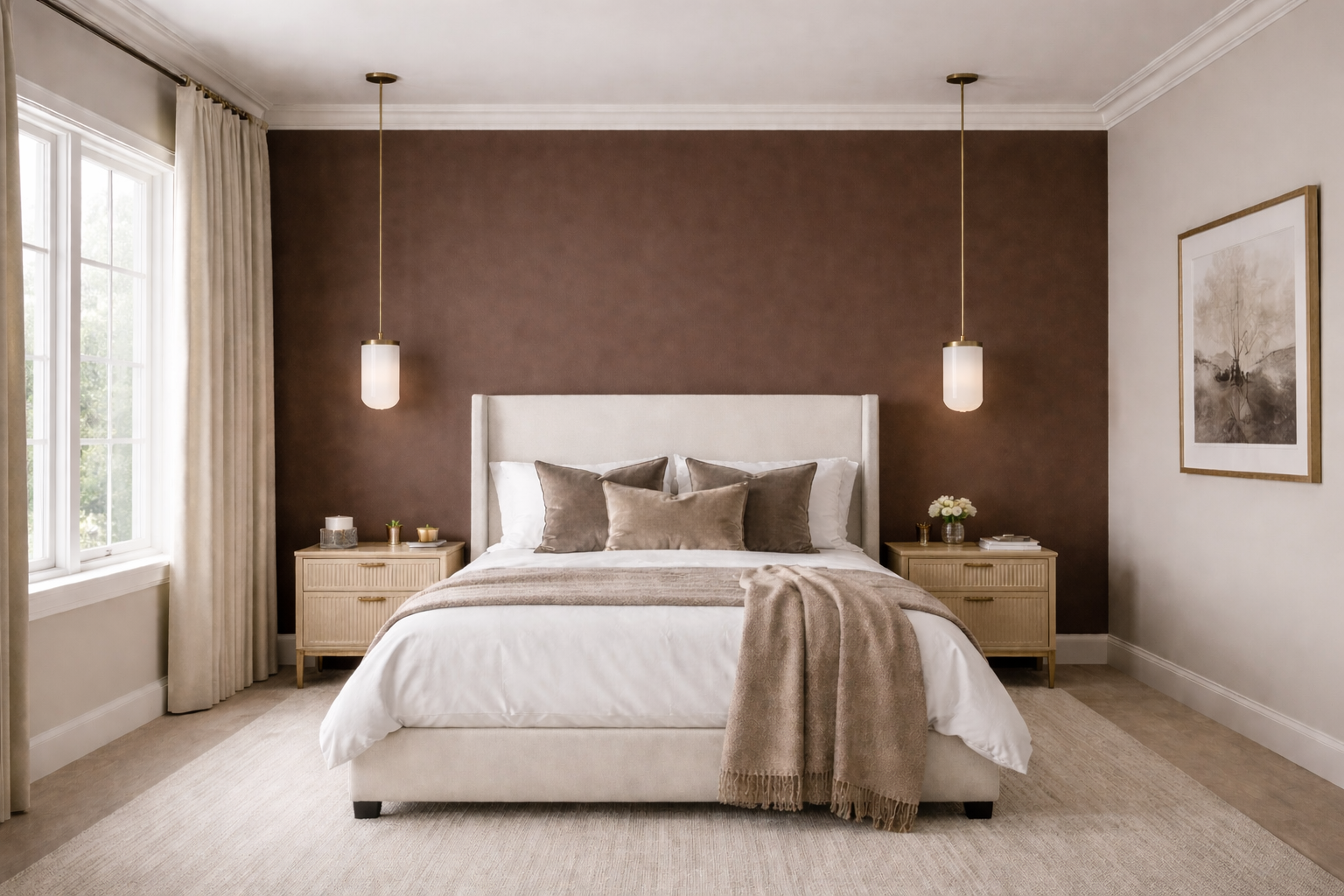
A painted accent wall can anchor a focal point in the room. In this bedroom, the deep warm tone behind the bed creates contrast and balance while the surrounding neutral walls keep the space light and calm.
A painted accent wall can be incredibly effective when it anchors a focal point or adds depth to a room.
Consider a deep warm brown behind a primary bed layered with tailored bedding and symmetrical lighting. Or a soft charcoal grounding a fireplace wall in a light filled living room. In open concept homes, a darker painted wall can help define a dining area without adding physical barriers.
Paint works when it highlights architecture or corrects proportion.
It does not work when it feels arbitrary.
If you walk into a room and instinctively question why one wall is darker, the design likely lacks intention. Accent paint should support the layout, lighting, and furnishings. It should never feel like a quick decorative fix.
When done correctly, a painted accent wall can:
• Define a focal point
• Add warmth to a neutral interior
• Balance natural light
• Create intimacy in a larger bedroom
• Add contrast in a modern living room
When done poorly, it can fragment a space and make the room feel visually smaller.
2. Wallpaper Accent Walls
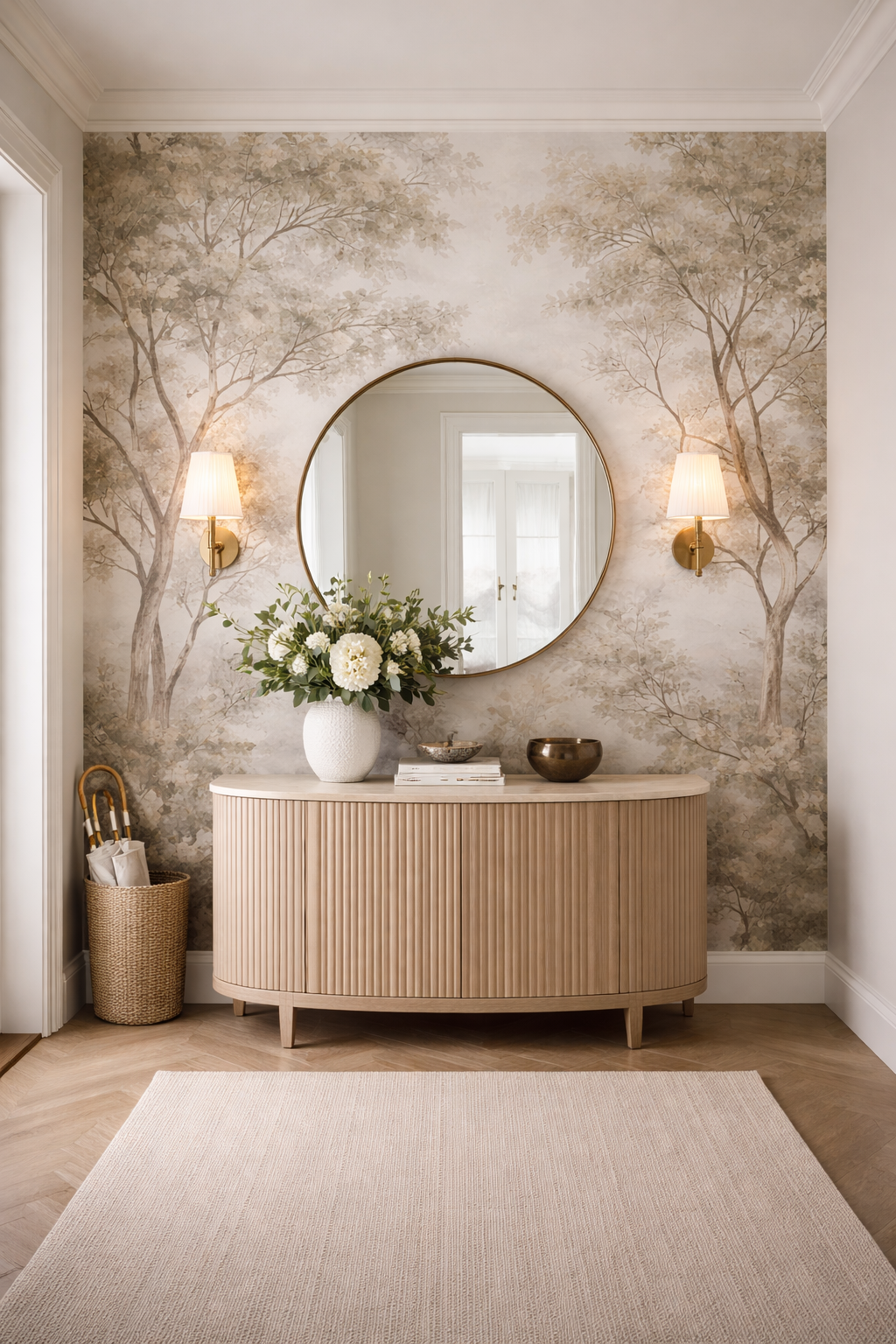
Wallpaper can introduce personality and depth in transitional spaces like an entryway. A mural scale pattern adds visual interest while the surrounding neutral palette keeps the space refined.
Wallpapered accent walls absolutely still work and often feel more elevated than paint alone.
They are especially impactful in:
• Powder rooms
• Dining rooms
• Bedrooms behind a headboard
• Entryways that need personality
A grasscloth can introduce warmth and texture. A large scale mural can create an immersive dining experience. A subtle pattern can soften a contemporary space that feels too stark.
Where wallpaper fails is usually in scale and cohesion.
Small, busy prints on a single wall in a large open concept space can feel disconnected. Bold patterns that fight the furnishings instead of supporting them create tension rather than harmony.
Wallpaper should feel integrated into the full material story of the room, not layered on top of it.
3. Three Dimensional Accent Walls
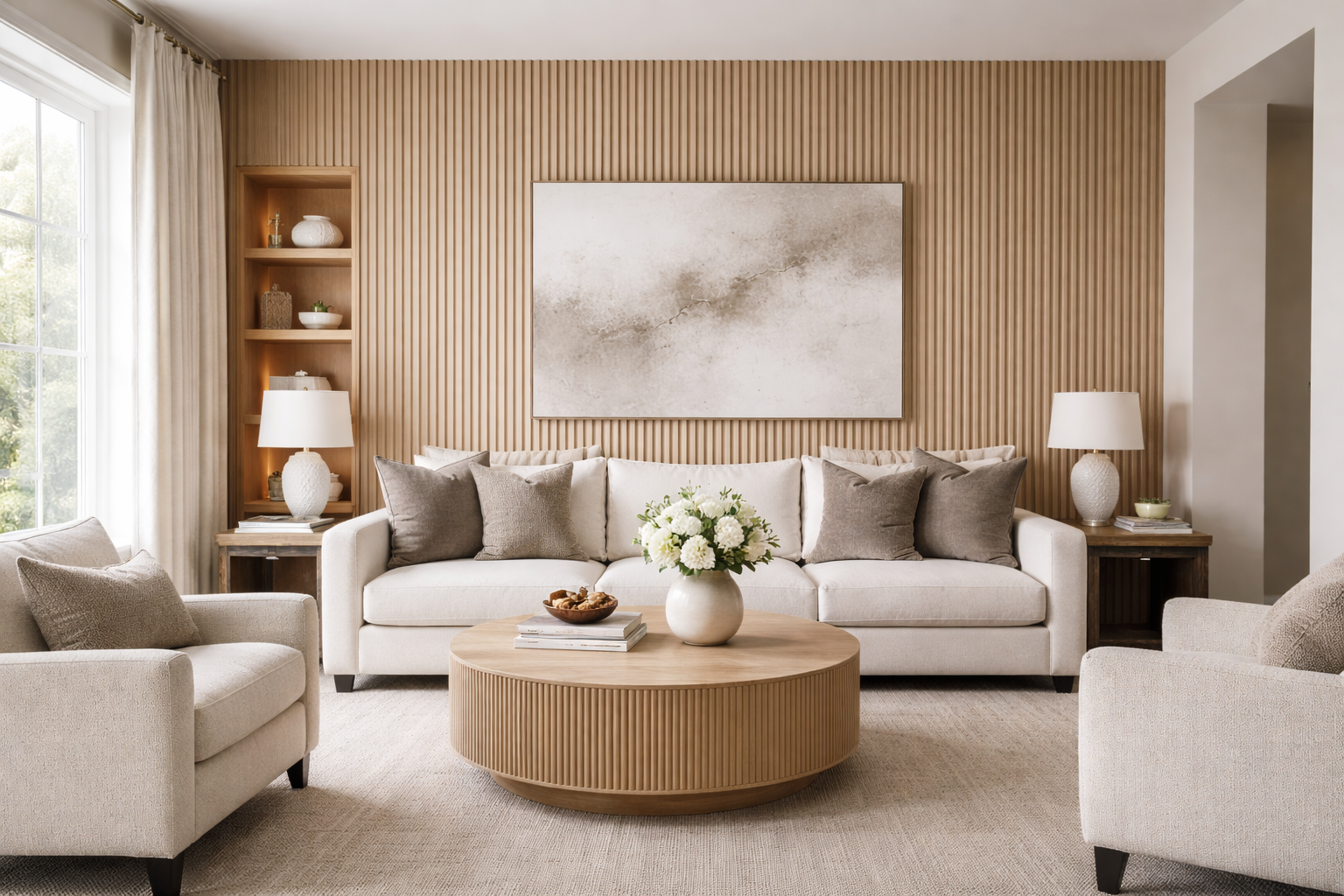
Three dimensional accent walls bring architectural depth to contemporary interiors. Fluted millwork adds texture, warmth, and rhythm while still allowing the room to feel calm and balanced.
This is where accent walls have evolved most beautifully.
Wood slat panels. Applied molding. Limewash. Venetian plaster. Fluted millwork. Stone. These are all accent walls.
The difference is they add texture and depth, not just color.
A slatted wood feature wall can warm a minimal modern living room. Applied molding can give architectural presence to a builder grade dining room. Venetian plaster can create subtle movement and softness in a primary suite.
These approaches feel timeless because they reference architecture rather than trend.
However, restraint is key.
If a home already has exposed beams, built ins, intricate trim, and detailed millwork, adding another heavy feature wall can create visual noise.
Accent walls should add clarity, not compete.
When Accent Walls Do not Work
Accent walls often fail when:
• Every room has one
• The rest of the room is under designed
• They are used as a quick fix instead of part of a full design plan
• The scale feels disproportionate
• The wall does not have a defined purpose
Design is about balance.
If every wall is bold, nothing feels special.
If one wall is dramatic but the rest of the room is flat, it feels disconnected.
An accent wall should enhance the choreography of the space, not interrupt it.
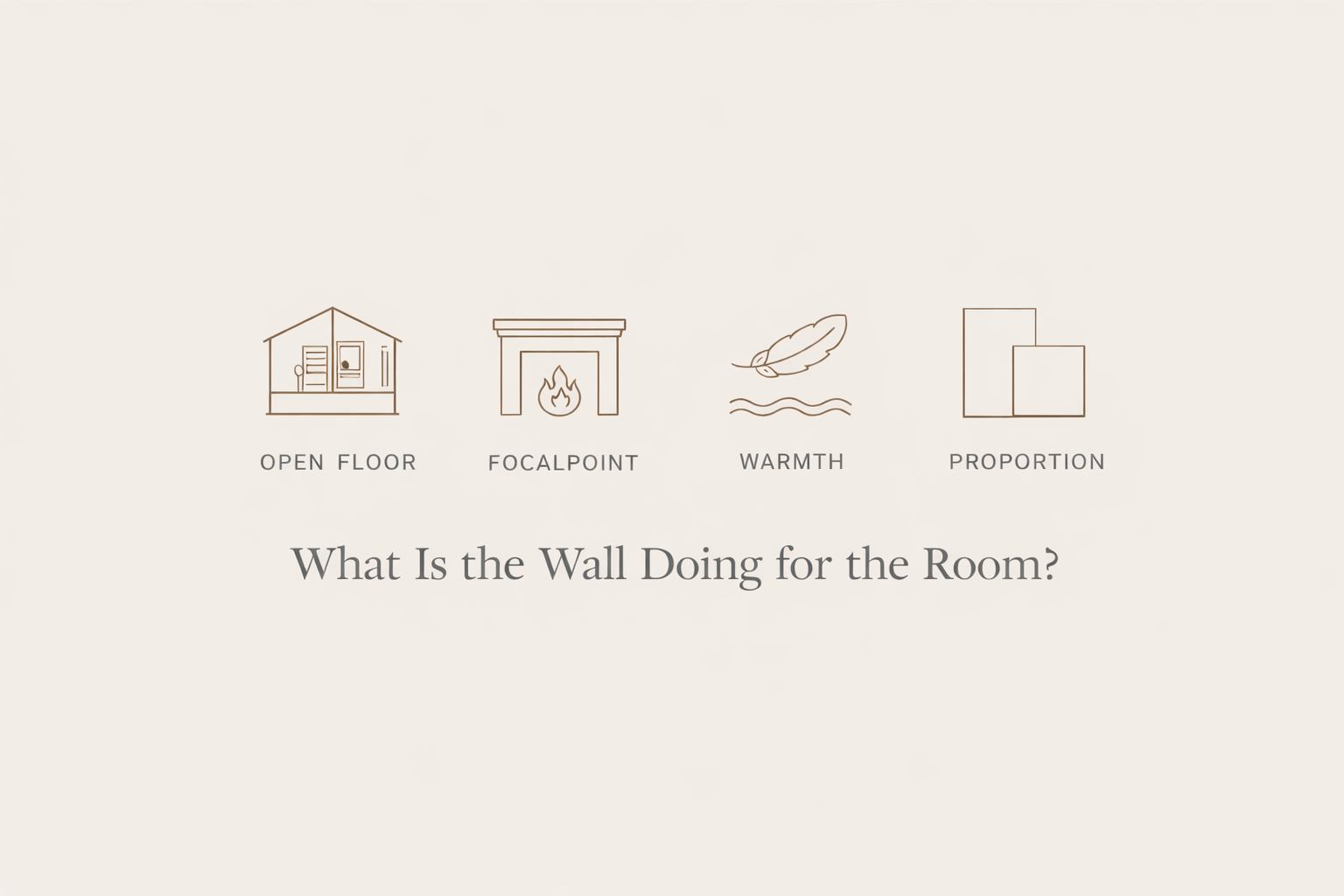
The real design question is not whether accent walls are in or out. It is what the wall is doing for the room. A well designed accent wall should define space, anchor a focal point, or introduce texture and warmth.
The REal Question
The question is not whether accent walls are in or out. The question is this: What is the wall doing for the room?
Is it defining space in an open floor plan?
Is it adding warmth where the room feels cold?
Is it grounding a focal point?
Is it creating intimacy?
If it does not have a job, it likely does not belong.
Accent walls still work in 2026.
But they work best when they are intentional, integrated, and aligned with the overall story of the home. As with all design decisions, context matters more than trend.
To find other accent wall inspiration check out these other blogs
— Claire
*Disclosure: Some visuals were created using AI-generated imagery to illustrate key design concepts.
