
JOURNAL 8 – How to Choose Art for Your Home
(And actually hang it well)
There’s a moment in nearly every project where a space feels almost complete.
The furniture is in. The palette is balanced. The lighting is layered.
And yet… something is missing.
It’s not more furniture. It’s not another decorative object.
It’s art.
Art is what transforms a space from styled to personal. But it’s also one of the most overwhelming decisions homeowners face.
So let’s simplify it.
1. Start With Feeling, Not Matching
The biggest mistake I see?
Choosing art to match the sofa.
Instead, ask:
What do I want this room to feel like?
Calm? Energized? Grounded? Collected?
Art should support the emotional tone of the space, not just the color palette.
A layered, neutral room might need contrast. A structured room might need softness.
This is where intention comes in.
2. You Don’t Need to “Understand” the Art
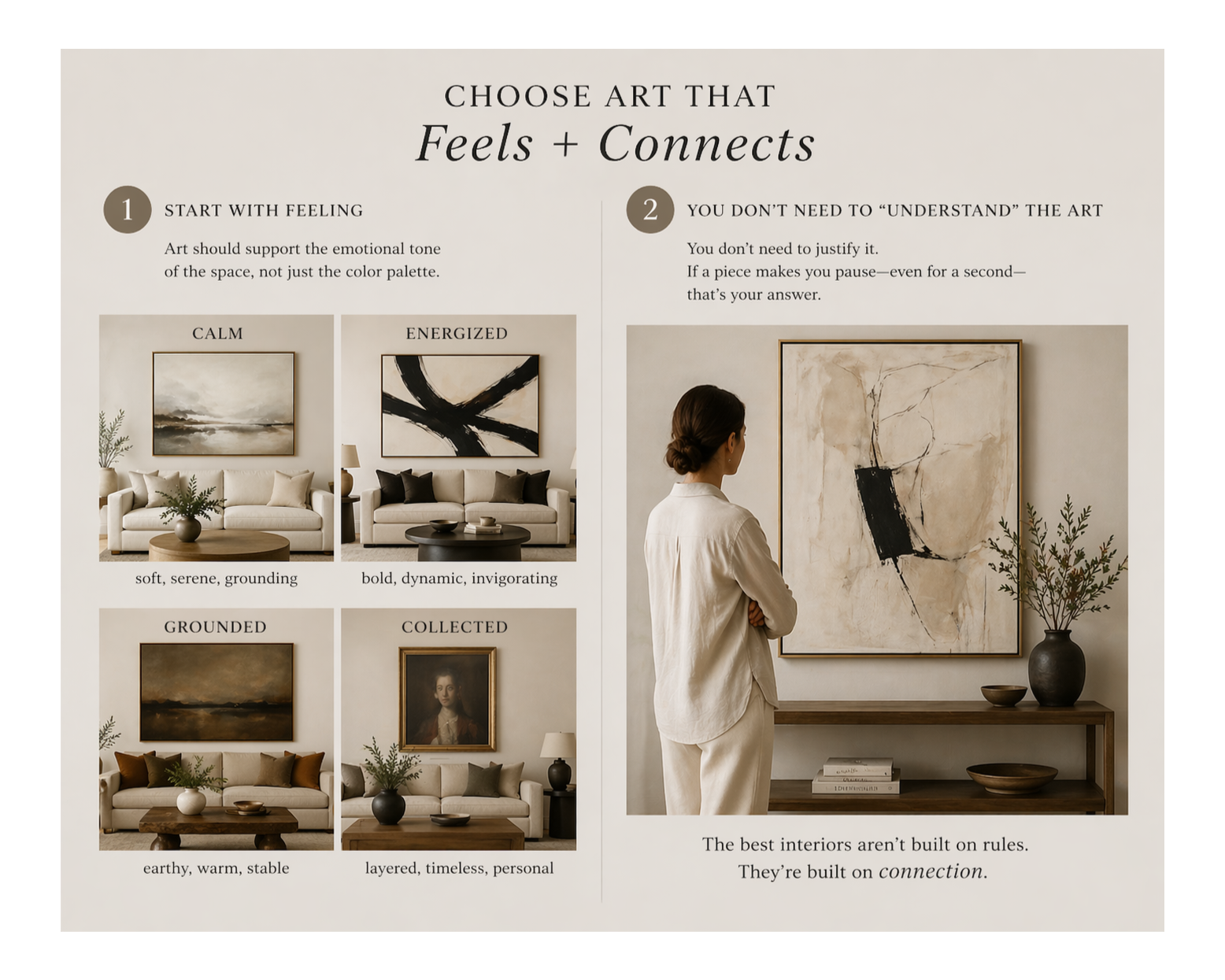
You don’t need to justify it. You don’t need to explain it.
If you pause in front of a piece—even for a second—that’s your answer.
The best interiors aren’t built on rules. They’re built on connection.
3. Scale is Everything
If something feels “off” in a room, it’s usually not the art…
…it’s the size of the artwork.
General guidance:
Art above furniture should be 2/3 to 3/4 the width of the piece below
Oversized art = more impact, less clutter
Small art works best in groupings, not alone
When in doubt, go bigger.
4. Placement Is More Strategic Than You Think
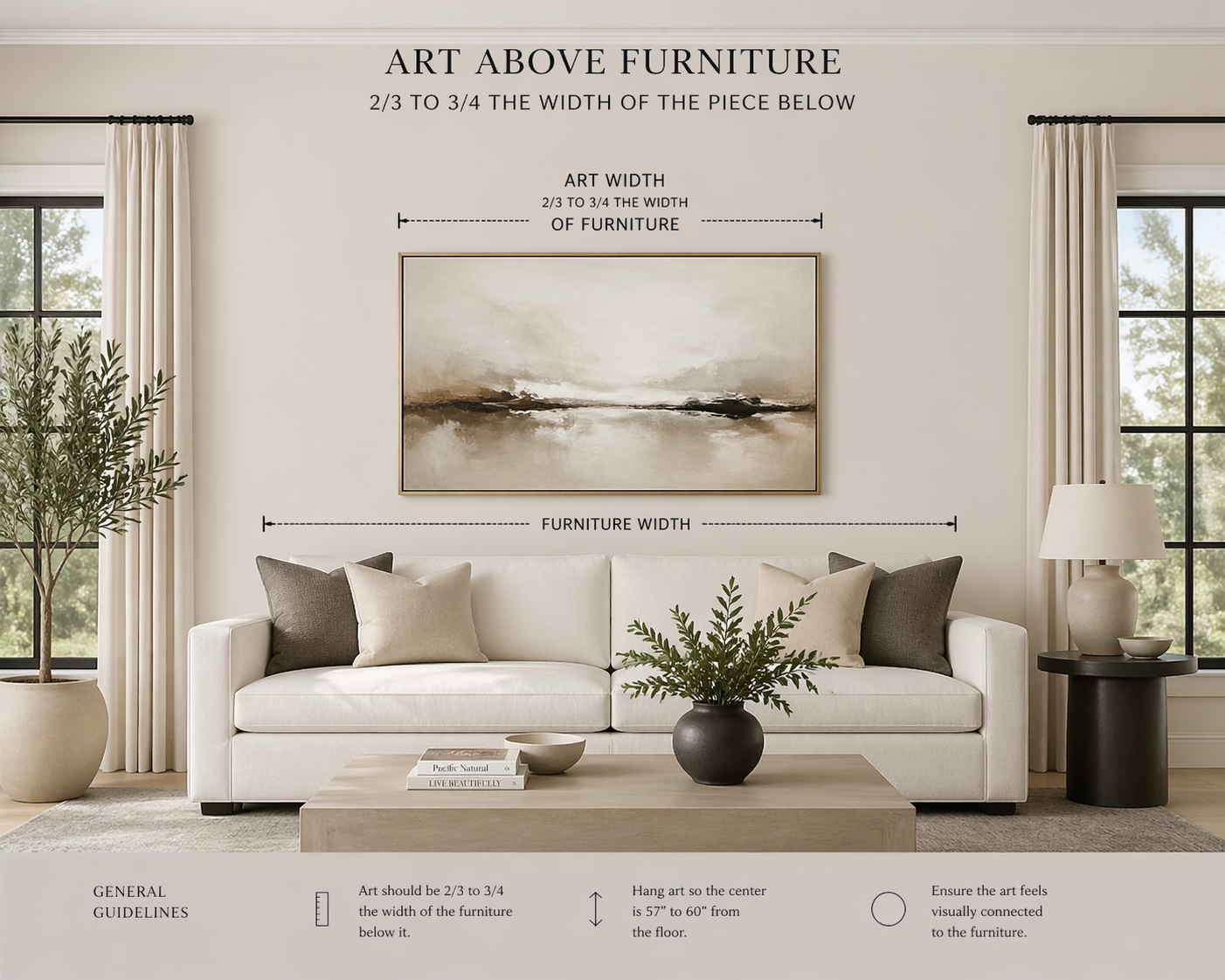
The most common mistake? Hanging art too high.
Ideal placement:
Center of artwork at 57–60 inches from the floor
Or visually anchored to furniture (not floating above it)
Art should feel integrated into the architecture, not like an afterthought.
5. Mix, don’t Match
Try combining:
Vintage + modern
Photography + abstract
Canvas + framed pieces
This creates that layered, lived-in look without feeling cluttered.
6. Gallery Walls Need Structure (Even when they look effortless)
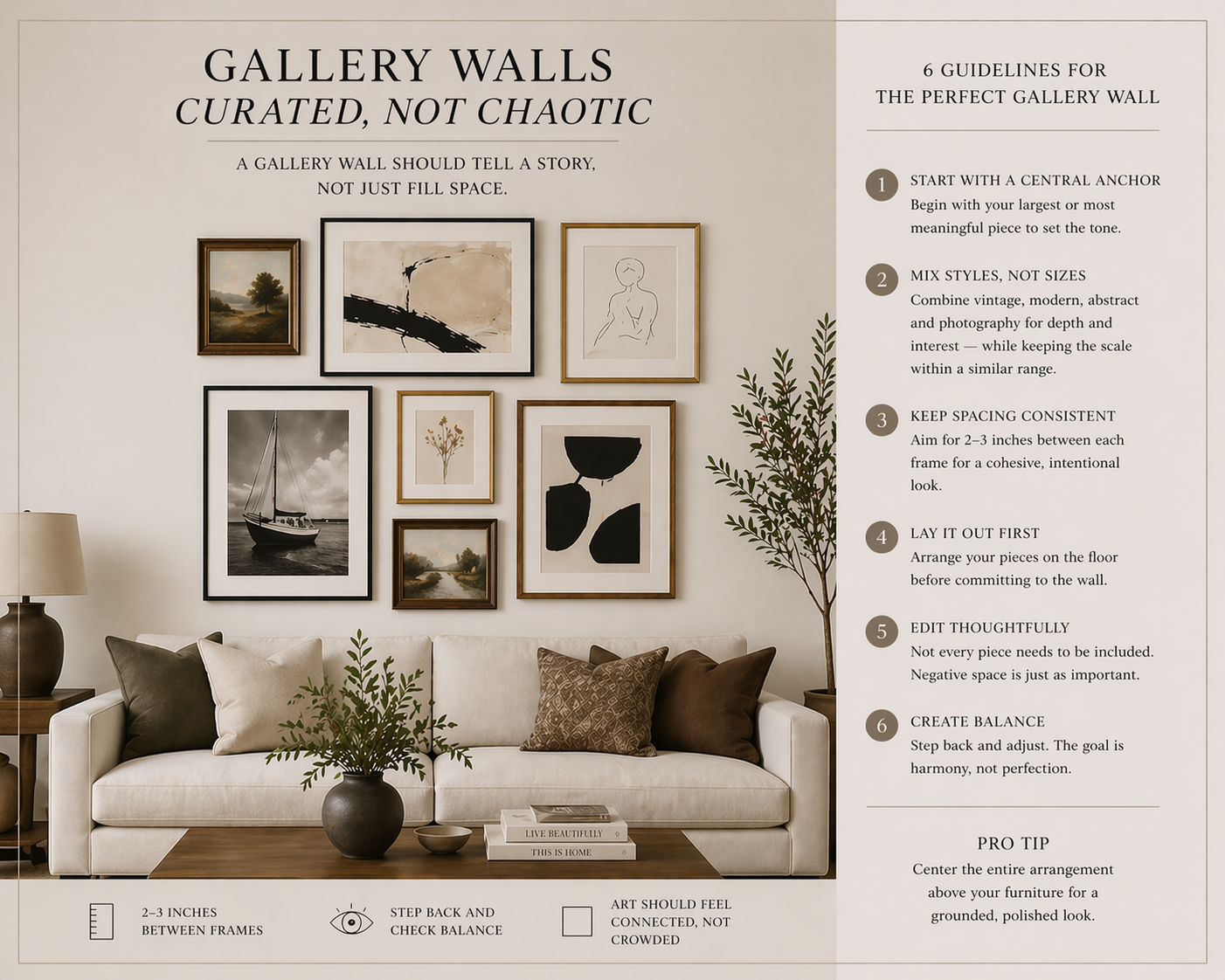
A gallery wall should feel curated, not chaotic.
Tips:
Start with a central anchor piece
Keep spacing consistent (2–3 inches between frames)
Lay it out on the floor first
And most importantly—edit.
Not every piece needs to go up.
7. Art Is the Story of the Home
This is where everything comes together.
Art can reflect:
Where you’ve been
What you value
How you live day to day
It’s not just decoration.
It’s identity.
Final Thought
If your home feels unfinished, don’t rush to fill it.
Pause.
Look at your walls.
And ask yourself: What story hasn’t been told yet?
— Claire
*Disclosure: Some visuals were created using AI-generated imagery to illustrate key design concepts.
